


Poor dimensional stability, short service life, frequent porosity defects, and unstable assembly matching have long been hidden troubles in mechanical equipment supporting parts production. Most purchasers only focus on surface appearance and unit price when selecting casting accessories, ignoring material density, mold precision, post-processing technology and fatigue resistance under long-term high-load operation. These neglected deep-seated problems will directly lead to equipment failure, increased maintenance costs, shortened overall service cycle and unnecessary production shutdown losses. Choosing qualified aluminum alloy die casting components can fundamentally avoid systematic risks in mass production and precision matching scenarios.
Many die casting products on the market use low-purity aluminum materials and simplified die-casting processes, resulting in internal tiny air holes that cannot be detected by simple appearance inspection. After long-term vibration, high temperature and pressure operation, these invisible defects expand rapidly, causing cracking, deformation and air leakage accidents. Professional customized die casting solutions from Yuwang Mingyu Precision Casting adopt high-grade aluminum alloy formula and vacuum die-casting process, which greatly reduces internal defects and ensures consistent internal structure of each finished part. Compared with ordinary castings, it significantly improves pressure resistance, corrosion resistance and structural toughness in complex working environments.
The mismatch between casting precision and assembly tolerance is another core hidden problem that plagues downstream machinery manufacturers. A slight dimensional deviation of 0.01mm will cause loose fitting, abnormal wear, increased noise and accelerated aging of supporting accessories. Conventional die casting technology is difficult to control ultra-fine tolerance standards in bulk production, resulting in high rejection rate and repeated debugging costs. Precision aluminum die casting adopts integrated precision mold opening, numerical control finishing and multi-dimensional size testing, realizing stable ultra-small tolerance control, fully adapting to automated assembly lines and high-precision equipment matching requirements.
Working environment adaptability determines the actual practical value of die casting parts. Outdoor humidity, temperature difference changes, oil corrosion, mechanical impact and frequent load changes will continuously test the comprehensive performance of aluminum castings. Ordinary die castings are prone to oxidation, paint peeling, surface corrosion and strength attenuation after short-term use in harsh environments. High-density aluminum alloy die castings have excellent weather resistance, thermal stability and anti-corrosion performance, maintaining stable mechanical properties whether used in automobile parts, intelligent equipment, power machinery or industrial supporting structures.
Cost calculation of die casting parts cannot only look at the upfront purchase price. Low-price inferior castings bring frequent replacement, equipment maintenance, production delay and after-sales compensation costs, which far exceed the price difference of high-quality finished products in the whole life cycle. Long-term mass procurement requires products with consistent batch quality, stable delivery cycle and standardized post-processing service. Optimized aluminum die casting schemes reduce comprehensive operating costs for enterprises, lower later maintenance frequency, and extend the replacement cycle of mechanical supporting parts comprehensively.
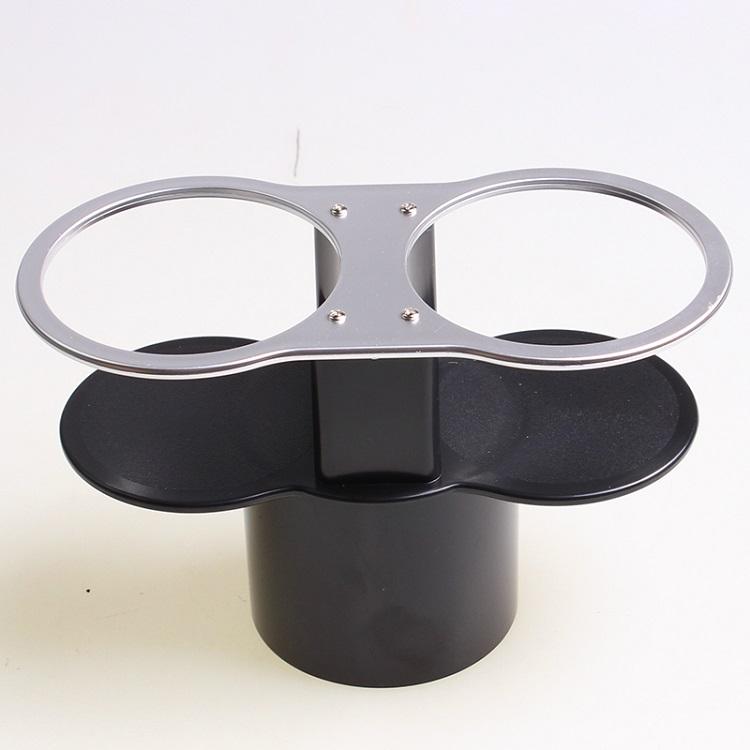
Performance Comparison of Ordinary Die Castings & Premium Aluminum Alloy Die Casting Parts
| Performance Indicator | Ordinary Aluminum Die Castings | High-Precision Aluminum Alloy Die Casting Parts |
|---|---|---|
| Internal Structure Defect Rate | High, obvious hidden porosity | Extremely low, vacuum densified structure |
| Dimensional Tolerance Precision | ±0.05mm and above | ±0.01mm ultra-precision control |
| High Temperature Resistance | Poor, easy to deform above 120℃ | Stable below 200℃, no structural deformation |
| Corrosion & Oxidation Resistance | Weak, easy to rust and peel outdoors | Strong anti-corrosion, suitable for humid and oily environments |
| Fatigue Service Life | Short, frequent damage under frequent vibration | Long-lasting, adapt to continuous high-load operation |
| Mass Production Consistency | Uneven quality between batches | Highly unified standard for whole-batch products |
Most users overlook the importance of surface treatment and sealing process of die casting parts. Unpolished rough surfaces will increase friction resistance during operation, accelerate component wear, and affect the overall operation efficiency of mechanical equipment. Professional aluminum die casting parts go through deburring, polishing, anodizing, spraying and multi-layer anti-corrosion treatment, with smooth surface finish, low friction coefficient and better matching coordination with adjacent parts. It effectively reduces mechanical operation noise and prolongs the matching service life of the whole set of equipment.
Customization flexibility also directly affects application value of die casting accessories. Different industries such as automobile chassis accessories, communication equipment shells, automation mechanical parts and household electrical structural parts have unique shape, thickness and load requirements. Non-standard customized die casting can realize special shape molding, integrated structure design and combined functional optimization, avoiding splicing assembly faults caused by scattered parts. It meets personalized use demands of various precision machinery industries while ensuring overall structural strength.
In actual industrial production, unqualified die casting quality will also bring hidden safety hazards to equipment operation. Structural cracking, sudden fracture and loose parts may cause equipment failure, safety accidents and production safety risks. Choosing mature and reliable aluminum alloy die casting products strictly follows national industry production standards, undergoes strict pressure testing, strength testing and appearance quality inspection before delivery. Every finished product meets safety use specifications, fully protecting stable and safe operation of industrial production lines.
In summary, selecting aluminum alloy die casting parts needs to focus on deep quality attributes rather than superficial parameters. Internal density, precision control, environmental adaptability, full-life cost and batch stability are the key factors determining whether products can meet long-term stable use. Professional precision die casting solutions solve common pain points and hidden quality problems in the industry at the source, helping manufacturing enterprises reduce losses, improve efficiency and obtain more stable long-term production benefits.